From Idea to Launch: The Process an E-commerce Development Company Follows
Grow Your Business. We bring the best way just for your business
Turning an E-commerce Vision into Reality
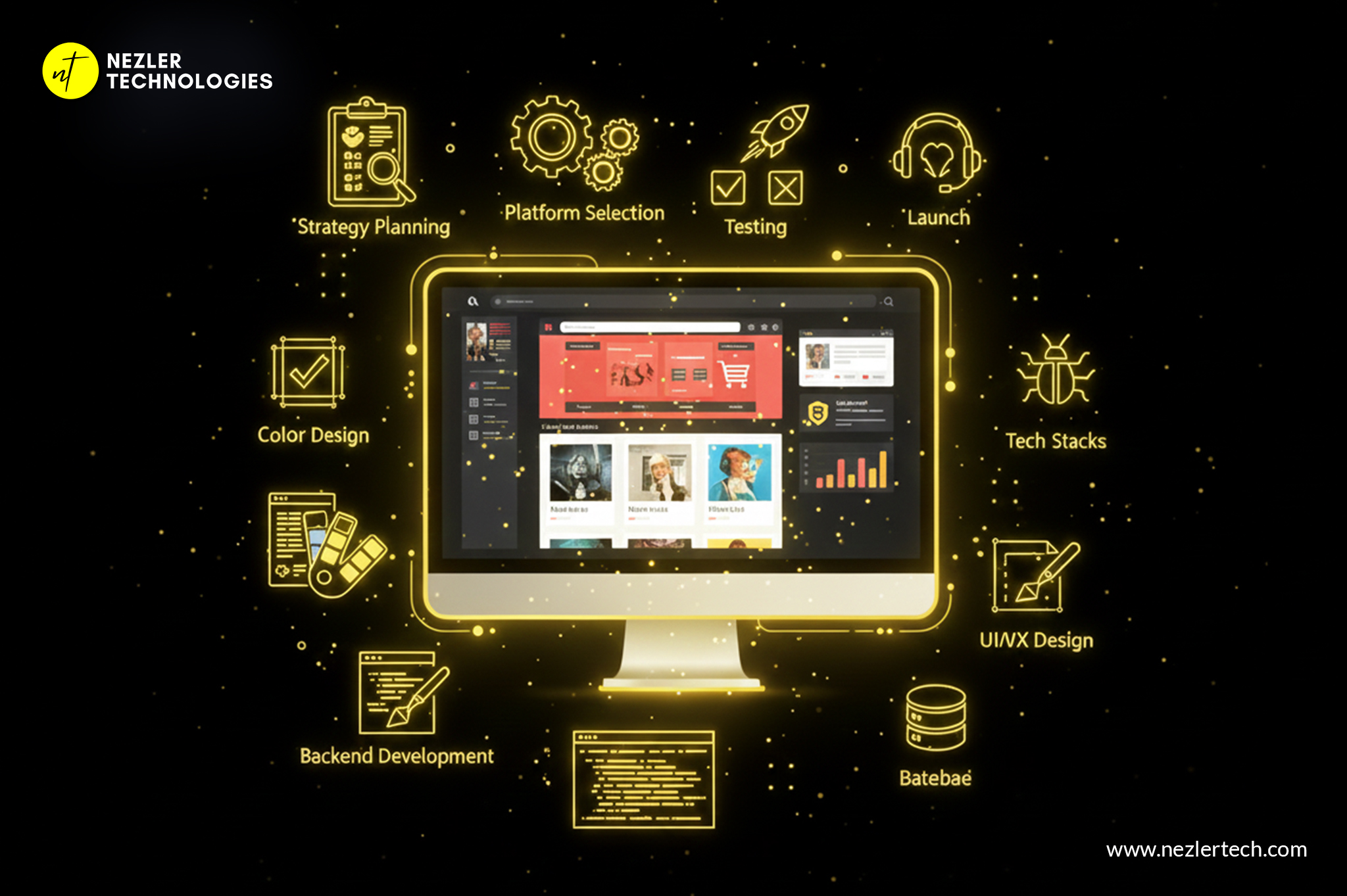
Launching a successful online store requires far more than a strong business idea alone. An e-commerce development company transforms your vision into a fully functional digital storefront through a structured and strategic process. From initial discovery to post launch optimisation, every stage plays a crucial role in building an online store that is scalable, secure, and designed to convert visitors into customers.
Whether you are a startup founder or an established brand moving into digital commerce, understanding this journey helps set clear expectations and enables informed decision making. Professional e-commerce website development focuses not only on aesthetics but also on performance, usability, and long term growth. Throughout this article, we explore the six essential stages that experienced developers follow to take an e-commerce idea from concept to launch. Each phase builds on the previous one, ensuring your online store delivers exceptional user experiences and sustainable business results.
Step 1: Business Analysis and Strategy Planning
Every successful e-commerce development company begins with a comprehensive discovery phase. This stage establishes the foundation for the entire project and aligns technical execution with business goals.
Key activities during this phase include:
- Conducting detailed stakeholder interviews to understand objectives, target audience, and brand positioning
- Performing market research to analyse competitors, customer behaviour, and industry trends
- Defining core functionalities such as payment gateways, inventory management, shipping integrations, and customer accounts
- Creating a structured project roadmap with milestones, timelines, and deliverables
- Establishing key performance indicators to measure success after launch
This strategic groundwork reduces risks later in the project. By identifying challenges early and aligning development priorities with business objectives, the e-commerce website development process remains focused, efficient, and outcome driven.
Step 2: Platform Selection and Architecture Design
Choosing the right technology stack is a critical decision that directly impacts performance and scalability. An experienced ecommerce development company evaluates your needs carefully rather than recommending a one size fits all solution.
This phase typically includes:
- Assessing platforms such as Shopify, WooCommerce, Magento, or custom builds based on budget and scalability needs
- Designing the technical architecture, including servers, databases, APIs, and security layers
- Planning mobile responsiveness to ensure consistent performance across all devices
- Mapping third party integrations like CRM systems, analytics tools, payment processors, and email platforms
- Preparing for future growth with options such as multi currency, multi language, and marketplace integrations
By balancing immediate requirements with long term expansion, professional e-commerce website development ensures your platform can evolve without expensive rebuilds.
Step 3: UI UX Design and Prototyping
A visually appealing store must also be intuitive and easy to use. This stage focuses on creating experiences that guide users smoothly from browsing to checkout.
Design and prototyping activities include:
- Creating wireframes to map user journeys, navigation structures, and page layouts
- Developing high fidelity designs that reflect brand identity through colour, typography, and imagery
- Designing product pages with clear calls to action, detailed descriptions, and review sections
- Optimising checkout flows to reduce friction and minimise cart abandonment
- Building interactive prototypes for stakeholder review and early feedback
Professional e commerce website development prioritises usability at every step. Through testing and iteration, designers ensure the final interface is both visually compelling and conversion focused.
Step 4: Backend Development and Feature Integration
This is where functionality comes to life. An ecommerce development company builds the systems that power your store behind the scenes.
Core development tasks include:
- Developing robust product catalogues with search, filtering, and pricing logic
- Integrating secure payment gateways that meet compliance and security standards
- Implementing inventory management systems with real time synchronisation
- Building customer account features such as order history, saved addresses, and recommendations
- Connecting shipping calculators, tax engines, and automated email notifications
Throughout the e-commerce website development process, developers follow best practices to ensure clean code, fast performance, and secure handling of customer data.
Step 5: Testing, Optimisation, and Quality Assurance
Launching without proper testing can lead to serious issues. Quality assurance ensures the platform performs reliably under real world conditions.
Testing typically covers:
- Functional testing across browsers, devices, and operating systems
- Performance testing to maintain fast loading times during peak traffic
- Security testing to protect against vulnerabilities and data breaches
- User acceptance testing with real users to gather practical feedback
- Load testing to confirm infrastructure stability under high demand
A professional e-commerce development company treats quality assurance as an ongoing process. Continuous optimisation ensures the final product is polished, reliable, and ready for launch.
Step 6: Launch and Post Launch Support
Going live marks the beginning, not the end, of your ecommerce journey. Ongoing support is a critical part of professional e-commerce website development.
Launch and post launch activities include:
- Deploying the website to production servers with careful monitoring
- Setting up analytics to track traffic, conversions, and revenue
- Training internal teams to manage products, orders, and customer support
- Monitoring early performance and resolving issues quickly
- Providing continuous maintenance, updates, and feature enhancements
Long term success depends on continuous improvement. A reliable e-commerce development company remains a strategic partner as your business grows and evolves.
Final Thoughts: Why a Structured Process Ensures Success
Building a successful online store requires careful planning, technical expertise, and disciplined execution. An experienced e-commerce development company follows this structured six step process to reduce risk, control costs, and deliver high performing digital platforms.
From strategy and design to testing and post launch optimisation, every stage plays a defined role in creating scalable success. The quality of your e commerce website development process often determines whether your store simply exists or truly thrives.
If you are looking to build an online store that stands out in a competitive market, partnering with the right experts makes all the difference. Nezler delivers end to end ecommerce solutions that combine strategic insight, creative excellence, and technical precision, guiding your business from idea to long term growth.